Study Technique
Introduction
Warning: Taxonomy is in its infancy, needing much more information with much research yet to be done.
We help ourselves to learn by splitting complex subjects into small parts, and learning each small part separately. Then we add to one such part, learn that, and then add some more, till we re-build the whole in all its complexity.
The smallest part, I call a 'frame'.
Have a look at the first frame for biology.

| Eukaryota | Archaea | Eubacteria |
|---|
The whole of the living world consists of 3 groups, called Domains:
- Domain Bacteria/Eubacteria
- Domain Archaea
- Domain Eukaryota
In detail, these 3 Domains are:
- Domain Bacteria/Eubacteria:
Eubacteria = "true bacteria", thus excluding Archaea. Bacteria are single-celled, enclosed by a rigid membrane made of peptidoglycan, but without any internal membranes to wrap around its DNA molecule which exists as a single loop called a plasmid.
- Domain Archaea:
Archaea are single-celled, enclosed by a semi-rigid membrane, but without any internal membranes to wrap around its DNA molecule which exists as a single loop called a plasmid.
Usually less than one µm (micron) long (one one-millionth of a meter). Archaea may have zero or one or more flagella attached. The flagella are hair-like appendages used for moving around, and are attached directly into the outer membrane of the cell. Other appendages include protein networks to which the cells may anchor themselves in large groups.
- Domain Eukaryota:
Eukaryota include animals, fungi, plants, algae and protists. Eukaryota = "true nut", meaning that all its members have cells each with a nucleus that looks like a nut. A nut is wrapped in a shell; a Eukaryota has its nucleus is wrapped in a membrane. Learn: Eukaryota = nucleus in a membrane.
Let us now expand our original frame.
| Eukaryota | Archaea | Bacteria |
|---|
| Metazoa | Fungi | Plantae | Algae | Protista |
|---|
Eukaryota consist of:
- Metazoa: also called Animalia or Animals - including single-celled Myxozoa , shell fish, fish, amphibians like frogs, arthropods like insects, reptiles, birds, and mammals.
- Fungi: like molds, mildew, rust on crops, yeast, mushrooms, lichen (symbiotic fungi + algae)
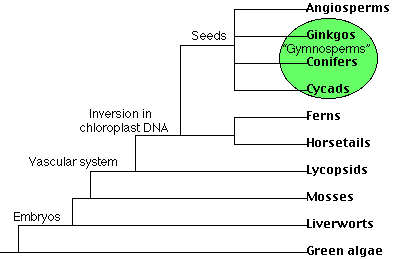
- Plantae: from liverworts, club mosses, ferns, hornworts, horsetails, gymnosperms like gingkos and conifers ('softwoods'), angiosperms/anthophyta or flowering plants like grasses thru to 'hardwood' trees.
- Algae/Chromista: diatoms, seaweeds, kelp, haptophytes
- Protista: ciliates, dinoflagellates, forams, red algae, green algae, choanoflagellates, stramenopiles, euglena, trypanosomes, slime molds, radilarians,
Learn these by rote.
Such rote-learning is essential for fast progress. You must know the frame perfectly before building on it.
We now come to the main table, showing the differences between these categories. Remember that different domains or different kingdoms within the same domain, may have the same property but be different because they use different molecular processes to achieve the same results.
The symbols are:
- color brown with Y indicates that generally, species in this Kingdom do have this property
- color red indicates that generally, species in this Kingdom do not have this property
- color pink indicates that some species in this Kingdom have this property while others do not.
| Property | Eukaryota | Archaea | Bacteria |
|---|
| Metazoa | Fungi | Plantae | Algae | Protista |
|---|
| eukaryotic | Y | Y | Y | Y | some | | |
| multicellular | Y(1) | Y | Y | some | | | |
| heterotrophic | Y | Y | | some | | some | many |
| photosynthesis | some (2) | | Y | Y | Y | some | some |
| thermal energy | | | | | | some | |
| cell walls (3) | | chitin | cellulose | Y | | most | peptidoglycan |
| motile | Y | | | many | Y | most | many |
| blastula stage | most | | | | | | |
| ECM (4) | Y | | | | | | |
| digestive chamber | Y (5) | | | | | | |
1. except Myxozoa
2. Some sponges use photosynthesis and nitrogen fixation
3. Cell walls are in addition to cell membranes. Plants use cellulose. Fungi use chitin. Algae use peptidoglycan. The rigid cell wall of plants is made of fibrils of cellulose embedded in a matrix of several other kinds of polymers such as pectin and lignin. The spores of slime molds also have cell walls of cellulose.
The linear nature of cellulose molecules and the many opportunities for side-to-side intermolecular hydrogen bonding provide enable the building of long, stiff fibrils.
4. ECM = Extracellular Matrix composed of collagen, proteoglycans, adhesive glycoproteins and integrin.
5. Internal digestive chamber, with one opening (Radiata, ex: sponges) or 2 openings (mouth and cloaca/anus; Bilateria)
Eukaryotic = "true nuts", referring to each nucleus being wrapped in its own membrane thus becoming an organelle.
Multicellularity occurs when an organism consists of more that one cell. Some organisms are no more than colonies where cells cohabit, and in some cases, take on specialized roles. Some Archaea form such colonies, evening incorporating bacteria within. There are indications that early in evolution, eukaryote cells combined with bacteria to use them as organelles (ex: chloroplasts). Multicellularity has been independently developed in at least seventeen different groups of organisms, including plants, chromists, fungi, and slime molds.
Autotrophic = requiring only simple inorganic compounds for nourishment, usually by drawing on chemicals from their environment while obtaining energy from sunlight, heat or radioactivity. (Plants, algae, archaea, some bacteria)
Heterotrophic = deriving nourishment from complex organic compounds produced by other organisms, which provide both nutrients and energy, usually by eating or parasitizing autotrophs and/or heterotrophs. (Metazoa, fungi, some protista, bacteria)
Characteristic
Any characteristic of a generic 'thing' is a property such that:
- all such 'things' possess this property
- only these 'things' possess this property.
Then you know:
- if something has this property then this something is a 'thing'
- If something does not have this property, it is not a 'thing'.
.
Unfortunately even scientists mistakenly use the word characteristic to mean property. This leads to ambiguity so common with poor expression. Please choose words carefully.
As an example, a characteristic of primates is a digitially opposed thumb on the hand but not the feet, such that the thumb can be pressed against each of the other fingers.
All primate species have this property. Any species which does not have this property is not a primate.
If you can prove me wrong, then this property is not a characteristic of primates.
( Qn: You can prove my claim for this characteristic is wrong, but can you prove my claim to be correct ? Always voice your explanation to ensure clarity in your mind. )
Domain Bacteria
Properties of bacteria:
- Prokaryotic (no membrane-enclosed nucleus)
- No mitochondria or chloroplasts
- A single chromosome:
- a closed circle of double-stranded DNA
- with no associated histones
- If flagella are present, they are made of a single filament of the protein flagellin; there are none of the "9+2" tubulin-containing microtubules of the eukaryotes.
- Ribosomes differ in their structure from those of eukaryotes
- Have a rigid cell wall made of peptidoglycan
- The plasma membrane is a phospholipid bilayer but contains no cholesterol or other steroids.
- No mitosis
- Mostly asexual reproduction
- Any sexual reproduction very different from that of eukaryotes; no meiosis
- Many bacteria form a single spore when their food supply runs low. Most of the water is removed from the spore and metabolism ceases. Spores are so resistant to adverse conditions of dryness and temperature that they may remain viable even after 50 years of dormancy.
- nutritional requirements:
- heterotrophs: Heterotrophs derive energy from breaking down complex organic compounds that they must take in from the environment. This includes saprobic bacteria found in decaying material, as well as those that rely on fermentation or respiration.
- autotrophs: Autotrophs fix carbon dioxide to make their own food source; this may be fueled by light energy (photoautotrophic), or by oxidation of nitrogen, sulfur, or other elements (chemoautotrophic). While chemoautotrophs are uncommon, photoautotrophs are common and quite diverse. They include the cyanobacteria, green sulfur bacteria, purple sulfur bacteria, and purple nonsulfur bacteria. The sulfur bacteria are particularly interesting, since they use hydrogen sulfide as hydrogen donor, instead of water like most other photosynthetic organisms, including cyanobacteria.
Domain Archaea
Archaea build the same structures as other organisms, but they build them from different chemical components. For instance, the cell walls of all bacteria contain the chemical peptidoglycan. Archaeal cell walls do not contain this compound, though some species contain a similar one. Likewise, archaea do not produce walls of cellulose (as do plants) or chitin (as do fungi). The cell wall of archaeans is chemically distinct.
Archaeans include inhabitants of some of the most extreme environments on the planet:
- high temperatures: near rift vents in the deep sea at temperatures well over 100 degrees Centigrade (because the water is under high pressure)
- in extremely alkaline or acid waters
- inside the digestive tracts of cows, termites, and marine life where they produce methane
- in the anoxic muds of marshes and at the bottom of the ocean
- in petroleum deposits deep underground
- in the otherwize dessicating extremely saline waters of salt works (eg Halobacterium, a halophilic or "salt-loving" archaean species)
- in the plankton of the open sea.
Domain Eukaryota
Eukaryota characteristics:
- Nuclear membrane: Eukaryote = true kernel, true nut where the 'nut' = nucleus, a membrane sac that contains the cell's DNA.
- Chromosomes: Unlike Archaea and Eubacteria, eukaryotes have theri DNA in liner pieces that are bound up with special proteins (histones) to make chromosomes.
- Mitosis: Mitosis is a method of cell division characteristic of Eukaryota. During cell division, Eukaryote DNA, which is divided into linear chromosomes (unlike bacterial DNA, which forms loops), must be duplicated.
- Cytoskeleton: Cytoskeleton is a network of protein filaments, mostly actin and tubulin, anchored to the cell membrane, criss-crossing the outside of the cell, thus providing shape and stability. By tensioning different parts of the network, it can push the internal plasma in chosen directions, and thus generate movement.
- Flagellum: Eukaryote flagella are different to bacteria flagella, being a bundle of 9 pairs of microtubules around a central pair controlled by a microtubule organizing center (MTOC) at its base. In Metazoa (animals) these MTOCs play a part in cell division by helping to create arrays of microtubules to pull apart the chromosomes. (That an apparatus has several diverse functions, showing that it may have evolved for one purpose but then adapted to serve other purposes, refutes the wishful-claims of "Creationists" aka "Fundamentalists/Genesis-adherents" for "irreducible organs" which thus required an Almighty Creator to design and create certain parts. Given enough research, nothing has yet been shown to be "irreducible".)
- Mitochondria: mitochondria, the energy producers, are contained within membranes..
- endoplasmic reticulum, or ER: a complex network of membranes that provides a transport system within the cell.
Almost all eukaryotes contain other complex organelles:
- Mitochondria: Mitochondria produce the vast amounts of energy need, by using aerobic respiration to convert food and oxygen into water and carbon dioxide, generating energy.
- Plastids: Plastids in plants and many protists use photosynthesis to manufacture food from carbon dioxide and water.
Chloroplasts and mitochondria contain their own DNA and replicate independently. These organelles are probably descendants of symbiotic bacteria living inside the eukaryote host, but have become so dependent on their host that they can no longer live outside.
It would seem then that Eukaryotes, including humans, are colonies rather than individual organisms, incorporating useful organisms both within our gut and within our cells.
We may now turn to the main differences between the Kingdoms within the Domain Eukaryota.
History
The most recent common ancestor of bacteria and archaea was probably a hyperthermophile that lived about 2.5 billion–3.2 billion years ago.
Bacteria were also involved in the second great evolutionary divergence, that of the archaea and eukaryotes. Here, eukaryotes resulted from ancient bacteria entering into endosymbiotic associations with the ancestors of eukaryotic cells, which were themselves possibly related to the Archaea. This involved the engulfment by proto-eukaryotic cells of alpha-proteobacterial symbionts to form either mitochondria or hydrogenosomes, which are still being found in all known Eukarya (sometimes in highly reduced form, e.g. in ancient "amitochondrial" protozoa).
Later on, an independent second engulfment by some mitochondria-containing eukaryotes of cyanobacterial-like organisms led to the formation of chloroplasts in algae and plants. There are even some algal groups known that clearly originated from subsequent events of endosymbiosis by heterotrophic eukaryotic hosts engulfing a eukaryotic algae that developed into "second-generation" plastids.
Algae/Chromista
The most complex forms of algae are found among the green algae, in a lineage that eventually led to the higher land plants. The point where these non-algal plants begin and algae stop is usually taken to be the presence of reproductive organs with protective cell layers, a characteristic not found in the other alga groups.
While Cyanobacteria have been traditionally included among the Algae, recent works usually exclude them due to large differences such as:
- lack of membrane-bound organelles
- presence of a single circular chromosome
- presence of peptidoglycan in the cell walls
- ribosomes different in size and content from those of the Eukaryotes.
- Rather than in chloroplasts, they conduct photosynthesis on specialized infolded cytoplasmic membranes called thylakoid membranes.
Therefore, they differ significantly from the Algae despite occupying similar ecological niches.
By modern definitions Algae are Eukaryotes and conduct photosynthesis within membrane-bound organelles called chloroplasts. Chloroplasts contain circular DNA and are similar in structure to Cyanobacteria, presumably representing reduced cyanobacterial endosymbionts. The exact nature of the chloroplasts is different among the different lines of Algae, reflecting different endosymbiotic events. The table below describes the composition of the three major groups of Algae. Many of these groups contain some members that are no longer photosynthetic. Some retain plastids, but not chloroplasts, while others have lost plastids entirely.
Plantae
The first plants on earth evolved from shallow freshwater algae much like Chara some 400 million years ago. These probably had an isomorphic alternation of generations and were probably filamentous. Fossils of isolated land plant spores suggest land plants may have been around as long as 475 million years ago.
Each organism is limited in its abiltities to overcome the trials of survival. Each advance in complexity can be seen as overcoming at least one of those trials.
For example, simple plants like liverworts, have no veins to carry fluid upwards, and so cannot grow tall. Ferns developed with veins which solve this problem, but lack woody tissue to grow taller. Trees developed woody tissues, grew tall, but became handicapped by drying climates. Later trees coated their leaves with wax to stop them drying out, and shed them in times of drought. And on it goes.
All the time, with each procreation, gentic mutations (changes) occur. These are small and usually go unnoticed, but they accumulate within each population. In easy times, there is increasing diversity contained by inbreeding. Then, in hard times, there is enough diversity for some organisms to adapt successfully, survive and procreate.
The less suitable die, and their genes are lost forever. Thus in hard times, in spite of huge numbers dying, there are multiple divergent genetic lines. Isolation of populations by rising waters or spreading deserts or shrinking forests, or isolation by choice such as choosing a more attractive skin or feather color (birds), or more attractive song-calls (birds, whales) or any other sexual signals (fish), can channel each single divergence along a new path.
When the Planet was devastated at the end of the Age of the Dinosaurs, killing vast numbers of life forms, and especially the large and fast and predatory reptiles, the marsupials, insignificant in size, number and species, began to take advantage in spite of the harsh conditions, with many types abandoning their burrows and taking to the trees and plains. Their divergence developed and numbers grew rapidly, as they found and filled the newly emptied niches
Fungi
A fungus is:
- eukaryotic ("true nut"): each cell has a nucleus which is contained within its own membrane.
- monophyletic: phylogenetically distinct from the morphologically similar slime molds (myxomycetes) and water molds (oomycetes).
- heterotrophic: possessing a chitinous cell wall, with the majority of fungal species growing as multicellular filaments called hyphae forming a mycelium; some fungal species also grow as single cells.
- asexual & sexual: Sexual and asexual reproduction of the fungi is commonly via spores, often produced on specialized structures or in fruiting bodies. Some species have lost the ability to form reproductive structures, and propagate solely by vegetative growth.
- nearer to animals: The fungi are more closely related to animals than plants.
The mushrooms we eat are the fruiting bodies of the fungus. When the underneath opens you can see gray vanes which carry thousands of spores. Put the mushroom on paper to collect the spores. Study under a microscope. Bury them in moist soil to propagate.
If you beat a flour into water and place near an open window, within a few days the mix turns frothy. This froth is produced by the yeast as it converts flour into carbon dioxide gas, water and energy which it uses. This frothy mix can be added to flour to make bread-dough to make sourdough bread. Or you can buy yeast dry, which can last for years, or as a moist paste which should be used quickly or refrigerated.
If you let your sourdough bread go moldy, study that mold with a magnifying glass. It will probably contain penicillin, which is used as an antibiotic to fight infection, Do NOT put penicillin mold on an infectdion - that could make you allergic to penicillin (an allergy which might some day kill you).
You can guess from these experiments, that the spores of fungi float in the air around us all the time, too small for us to see them.
Fungi live mostly in soil, dead matter, and as symbionts of plants, animals, or other fungi. They perform an essential role in all ecosystems in decomposing organic matter and are indispensable in nutrient cycling and exchange.
Features and characteristics
The fungi have a range of features defining the fungal kingdom, some of which are shared with other organisms while others are unique to the fungi:
- Shared features:
- With eukaryotes: All fungi are eukaryotic, containing membrane-bound nuclei with chromosomes. Fungal cells contain membrane-bound cytoplasmic organelles, DNA with noncoding regions called introns, sterol-containing membranes, and ribosomes of the 80S type. Fungi have a characteristic range of soluble carbohydrates and storage compounds, including mannitol and other sugar alcohols, trehalose and glycogen the latter of which is also found in animals.
- With animals: Fungi lack chloroplasts and are heterotrophic organisms, requiring preformed organic compounds as energy sources and also as carbon skeletons for organic synthesis.
- With plants: Fungi possess a cell wall. They reproduce by both sexual and asexual means, and like some basal plant groups, such as ferns and mosses produce spores. Similar to mosses and algae, fungi typically have haploid nuclei.
- With prokaryotes: As in some bacteria, biosynthesis of the amino acid, L-lysine, is via the α-aminoadipate pathway.
- Characteristics:
- apical growth: Fungi typically grow as hyphae, which extend at their tips. This apical growth form is in contrast with other filamentous organisms, like filamentous green algae, which grow by repeated cell divisions within a chain of cells (intercalary growth).
- yeast phase: Some fungi grow as single-celled yeasts which reproduce by budding, and some dimorphic fungi can switch between a yeast phase and a hyphal phase in response to environmental conditions.
- cell walls: The fungal cell wall contains glucans also found in plants, but also chitin not found in the Plant kingdom, but in some animals. In contrast to plants, fungal cell walls do not contain cellulose.
- : Fungal hyphae may have several nuclei within each hyphal compartment, and many budding yeasts are diploid.
Metazoa - phylum by phylum
Kingdom Metazoa or Animalia
Derivations:
Latin meta = with, after; zoa, from zoon = animal; anima = vital breath or soul.
The only Metazoan characteristic is an extracellular matrix (ECM) composed of:
- collagen:
Most collagens are made of long proteins that wind around each other to form a triple helix, and the resulting fibers have a high tensile strength.
- proteoglycans:
Proteo = of protein. Proteoglycan = a protein that is covalently bonded to one or more glycos-amino-glycan chains; a mucoprotein.
Glycosaminoglycan = any of a group of polysaccharides which contain amino-sugar residues, often found in complexes with protein molecules as proteoglycans, and include heparin, chondroitin, hyaluronic acid, and the blood-group substances.
- adhesive glycoproteins:
Glycoproteins are large molecules which branch. These molecules have the property of resisting compressive forces. That is, they are kind of like springs; they can be squished and then return to their old shape.
- integrin:
Integrin is the molecule that connects the outside of the cells to the extracellular matrix.
These four types of molecules are created inside, but exist outside, the cells of animals. These molecules fill up the spaces between cells and serve as structural elements.
The mechanical properties of these molecules are extremely important:
- they often form a scaffolding that becomes mineralized and so forms bones, shells, or spicules of various animals
- the extracellular matrix also plays a key role in the development of animals, from sponges to sea otters. :
- In the early development of animals, some cells are immobile and form sheets called epithelia.
- Other cells are motile, i.e., they move inside the animal. Cell motility is necessary for animals to develop from single cells into working individuals composed of many many cells. Extracellular matrix not only facilitates not only the mobility of motile cells and guides their movements within the developing embryo, but also helps to control the transition of cells from one type to another.
It appears that all animals share this complex system of development mediated by extracellular matrix, whereas all other multicellular organisms do not. This character is common to all animals as the result of their being descended from a common multicellular ancestor that also possessed this character.
Definitions:
- Genetics: Genetics is the study of genes. Genes are special molecules which determine each organism's structure and functioning. Organisms with almost identical genes, look the same, act the same, and function the same, and so are said to belong to the same species.
- Species: A species is a set of organisms sufficiently similar to appear identical. If they reproduce sexually then when mated, any two will produce fertile offspring. If such offspring are not fertile, the cross is termed hybrid, and the 2 parents are considered to belong to the same genus but not the same species.
Ex: when an Arab horse is mated with a Clydesdale horse the offspring is fertile because these 2 horses are 2 varieties of the one species.
When a horse and a donkey are mated, they produce an infertile offspring, called a mule. Thus the horse and the donkey belong to different species but they belong to the same genus. The reason that the mule is infertile is because the genes of the horse and the genes of the donkey do not match sufficiently well to perfect the reproductive process.
- Genus: Presumably a genus consists of species which can hybridize to give infertile offspring but no-one has checked all possiblities. A genus is what biologists can agree on as a genus. According to biologists: Genus is the category between a Species and a Family. (No kidding!)
- genetics: Genes are special molecules which determine each organism's structure and functioning. They connect together to form DNA.
- ecto-: = outside, external
- ectoderm: = outer germ layer of the early embryo leading to epidermis and neural tissue; outer layer of the body of a coelenterate etc.
- endo-: = within, inside
- endothelium: = layer of cells lining serous cavities (blood vessels, heart, lymphatic vessels).
- epi-: = near to, on, above, in addition
- epithelium: = tissue covering body surface and lining some hollow structures in animals, consisting of sheets of cells bound closely without intervening connective tissue
- eumetazoans: = true metazoans. Interchangeable. Used when "metazoans" is used for animals in general.
- meso-: = middle
- mesothelium: = layer of cells lining the embryonic body cavity and which eventually lines the pleurae, peritoneum and pericardium).
- metazoans: = eumetazoans = true metazoans (animals)
- radiata: = radiating; along any diameter, there is symmetry about the midline, eg jellyfish, starfish, sponge. Imagine a line thru the center. Imagine the cross-section. The left half is a mirror image of the right half.
- phyletic: = pertaining to the evolution of a species or the evolutionary line of a species
- para-: = beside
- paraphyletic: = running beside the main line of evolution.
- phylogeny: = geneaological tree (like a human family's hereditary line). Hypothesis: phylogeny maps evolution. Since most biological phenomena have an evolutionary explanation, phylogeny is Biology's equivalent of chemistry's Periodic Table.
- -thelium: [thele = nipple]
Evolution of the Metazoa
What property characterizes animals ? Animals all share multicellularity but multicellularity has been independently developed in at least seventeen different groups of organisms, including plants, chromists, fungi, and slime molds.
The Animal Kingdom (Metazoa) is usually considered to include multi-cellular, heterotrophic eukaryotes in which (unlike Plants) the cells are without cell walls.
Everything from sponges and jellyfish to insects and vertebrates belongs in "Metazoa", and considered to have evolved from a single unicellular choanoflagellate ancestor, sometime during the Ediacaran period.
From a simple colonial choanoflagellate, animals developed through increasing grades of specialization and complexity:
first sponges,
then coelenterates
and finally bilateral animals (possessing a head and distinct right and left sides).
A recent interpretation is that choanoflagellates contained within the monophyletic assemblage Metazoa (= "animals"), and Fungi as the closest sister group to Metazoa.
The problem here is that, although choanoflagellates seem clearly related to sponges, it is not clear how closely related sponges are to the rest of the Metazoa.
It is also difficult to see how such a locally organized organism as a sponge (essentially nothing but a glorified colonial protozoan) can develop into an organism with a specific body structure and internal organs.
The most widely held theory seems to be that a colonial choanoflagellate evolved into a hollow spherical ball of cells, the blastula, which constitutes the earliest embryonic stage of development, and even occurs in sponges.
However, it is not certain that such a blastaea animal ever even existed. The theory that "ontogeny recapitulates phylogeny," championed by 19th century German Darwinist Ernst Haekel (according to which the growing embryo passes through all its past evolutionary stages, ex: the early human fetus possesses gill slits and a tail), was enormously popular for some time.
All we can say for certain is that, some time during the Late Proterozoic era, an unknown protozoan (or protistan) organism developed into a tiny colonial form, which eventually became the common ancestor of the Metazoa.
The actual nature of this organism is not known, as it was soft-bodied and left no trace.
Why phylogeny ?
Phylogeny maps evolution. Therefore, a phylogenetic hypothesis is essential if you want to understand biological phenomena, most of which have an evolutionary explanation.
Since many scientists would like to know how animal diversity and animal body plans came to be, presently there is a great deal of work on resolving the evolutionary relationships among the major groups of animals. Much of this research has relied upon morphological characters, especially those expressed in early development (e.g. embryological characters). More recently, a significant advance in our understanding of animal phylogeny has been brought about by the study of molecules (in particular genes and their protein products) contained within animal cells. The phylogeny presented here is a relatively conservative guess based upon various published studies of 18S ribosomal RNA sequence data. As you can see, there are quite a few unresolved branches, and therefore a great deal of work to be done in this area.
Note that the phylum Porifera (the sponges) is paraphyletic. A few lines of independent evidence suggest that one group of sponges is actually more closely related to non-sponge animals than it is to the other sponges. This is an important finding for it implies that the lineage leading to all other animals (including ourselves) was directly descended from an animal with a sponge body and a sponge life style.