Liverworts
In Old English, the word 'liverwort' literally means liver plant for it was believed that liverworts cured diseases of the liver.
Description
It is estimated that there are 6000 to 8000 species of liverworts, though when Neotropical regions are better studied this number may approach 10,000. Some of the more familiar species grow as a flattened leafless thallus, but most species are leafy with a form very much like a flattened moss. Leafy species can be distinguished from the apparently similar mosses on the basis of a number of features.
 Leafy liverworts also differ from most (but not all) mosses in that:
- single-celled rhizoids
- leaves never have a costa (present in many mosses)
- may bear marginal cilia (very rare in mosses)
Other differences are not universal for all mosses and liverworts, but point to a liverwort:
- occurrence of leaves arranged in three ranks
- presence of deep lobes or segmented leaves
- lack of clearly differentiated stem and leaves
Most liverworts are small, usually from 2–20 millimetres (0.08–0.8 in) wide with individual plants less than 10 centimetres (4 in) long, so they are often overlooked. The most familiar liverworts consist of a prostrate, flattened, ribbon-like or branching structure called a thallus (plant body); these liverworts are termed thallose liverworts. However, most liverworts produce flattened stems with overlapping scales or leaves in three or more ranks, the middle rank being conspicuously different from the outer ranks; these are called leafy liverworts or scale liverworts.
However, certain species may cover large patches of ground, rocks, trees or any other reasonably firm substrate on which they occur. They are distributed globally in almost every available habitat, most often in humid locations although there are desert and arctic species as well. Some species can be a nuisance in shady green-houses or a weed in gardens.
In addition, 90% of liverworts contain oil bodies in at least some of their cells, and these cellular structures are absent from most other bryophytes and from all vascular plants. The overall physical similarity of some mosses and leafy liverworts means that confirmation of the identification of some groups can be performed with certainty only with the aid of microscopy or experience.
Liverworts have a gametophyte-dominant life cycle, with the sporophyte dependent on the gametophyte. Cells in a typical liverwort plant each contain only a single set of genetic information, so the plant's A typical liverwort's cells are haploid for the majority of its life cycle, thus missing the pairing of genes found in 'higher' plants. Thus there are no recessive genes. This contrasts sharply with the pattern exhibited by nearly all animals and by most other plants.
In the more familiar seed plants, the haploid generation occurs in the tiny pollen and the ovule, while the diploid generation is the germinated plant onwards. Another unusual feature of the liverwort life cycle is that sporophytes (i.e. the diploid body) are very short-lived, withering away not long after releasing spores. Even in other bryophytes, the sporophyte is persistent and disperses spores over an extended period.
Life cycle
Life cycle of a typical liverwort
The life of a liverwort starts from the germination of a haploid spore to produce a protonema, which is either a mass of thread-like filaments or else a flattened thallus. The protonema is a transitory stage in the life of a liverwort, from which will grow the mature gametophore ("gamete-bearer") plant that produces the sex organs.
The male organs are known as antheridia (singular: antheridium) and produce the sperm cells. Clusters of antheridia are enclosed by a protective layer of cells called the perigonium (plural: perigonia).
As in other land plants, the female organs are known as archegonia (singular: archegonium) and are protected by the thin surrounding perichaetum (plural: perichaeta). Each archegonium has a slender hollow tube, the "neck", down which the sperm swim to reach the egg cell.
Liverwort species may be either dioicous or monoicous. In dioicious liverworts, female and male sex organs are borne on different and separate gametophyte plants. In monoicious liverworts, the two kinds of reproductive structures are borne on different branches of the same plant. In either case, the sperm must swim from the antheridia where they are produced to the archegonium where the eggs are held.
OvuleOvuleThe sperm of liverworts is biflagellate, i.e. they have two tail-like flagellae that aid in propulsion. Their journey is further assisted either by the splashing of raindrops or the presence of a thin layer of water covering the plants. Without water, the journey from antheridium to archegonium cannot occur.
In the presence of such water, sperm from the antheridia swim to the archegonia and fertilisation occurs, leading to the production of a diploid sporophyte. After fertilisation, the immature sporophyte within the archegonium develops three distinct regions:
- a foot, which both anchors the sporophyte in place and receives nutrients from its "mother" plant
- a spherical or ellipsoidal capsule, inside which the spores will be produced for dispersing to new locations
- a seta (stalk) which lies between the other two regions and connects them.
When the sporophyte has developed all three regions:
- The seta elongates, pushing its way out of the archegonium and rupturing it
- While the foot remains anchored within the parent plant, the capsule is forced out by the seta and is extended away from the plant and into the air.
- Within the capsule, cells divide to produce both elater cells and spore-producing cells. The elaters are spring-like, and will push open the wall of the capsule to scatter themselves when the capsule bursts.
- The spore-producing cells will undergo meiosis to form haploid spores to disperse, upon which point the life cycle can start again.
Ecology
Today, liverworts can be found in many ecosystems across the planet except the sea and excessively dry environments, or those exposed to high levels of direct solar radiation. As with most groups of living plants, they are most common (both in numbers and species) in moist tropical areas. Liverworts are more commonly found in moderate to deep shade, though desert species may tolerate direct sunlight and periods of total desiccation.
Classification
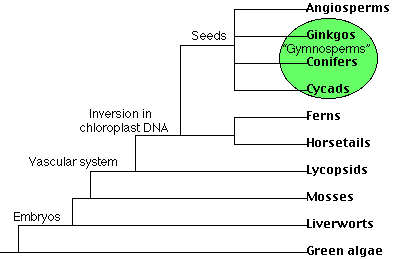
Traditionally, the liverworts were grouped together with other bryophytes (mosses and hornworts) in the Division Bryophyta, within which the liverworts made up the class Hepaticae (also called Marchantiopsida). However, since this grouping makes the Bryophyta paraphyletic, the liverworts are now usually given their own division. The use of the division name Bryophyta sensu latu is still found in the literature, but more frequently the Bryophyta now is used in a restricted sense to include only the mosses.
Internal classification
Bryologists classify liverworts in the division Marchantiophyta. This divisional name is based on the name of the most universally recognized liverwort genus Marchantia.
The Marchantiophyta is subdivided into three classes:
- Jungermanniopsida includes the two orders Metzgeriales (simple thalloids) and Jungermanniales (leafy liverworts).
- Marchantiopsida includes the three orders:
- Marchantiales (complex-thallus liverworts)
- Sphaerocarpales (bottle hepatics)
- Blasiales
- Haplomitriopsida is newly recognized as a basal sister group to the other liverworts; it comprises the genera:
- Haplomitrium
- Treubia
- Apotreubia
It is estimated that there are 6000 to 8000 species of liverworts, at least 85% of which belong to the leafy group.
Economic importance
In ancient times, it was believed that liverworts cured diseases of the liver, hence the name. In Old English, the word liverwort literally means liver plant. This probably stemmed from the superficial appearance of some thalloid liverworts (which resemble a liver in outline), and led to the common name of the group as hepatics, from the Latin word hēpaticus for "belonging to the liver". An unrelated flowering plant, Hepatica, is sometimes also referred to as liverwort because it was once also used in treating diseases of the liver. This archaic relationship of plant form to function was based in the "Doctrine of Signatures".
Liverworts have little direct economic importance today. Their greatest impact is indirect, through the reduction of erosion along streambanks, their collection and retention of water in tropical forests, and the formation of soil crusts in deserts and polar regions. However, a few species are used by humans directly. A few species, such as Riccia fluitans, are aquatic thallose liverworts sold for use in aquaria. Their thin, slender branches float on the water's surface and provide habitat for both small invertebrates and the fish that feed on them.