Lycopsida
 Kingdom: Plantae
Phylum: Tracheophyta
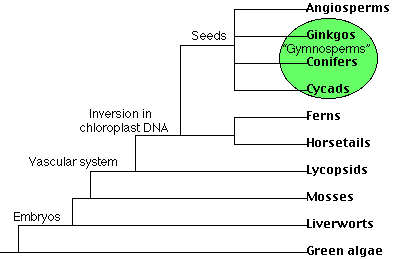
Division: Pteridophyta: all the vascular plants that do not bear seeds: ferns, horsetails, club mosses, and whisk ferns
Class: Lycopsida (or class Lycopodineae, Lycopodineae)
- Order Drepanophycales:
Class Lycopsida
Lycopsida are club mosses, quillworts and scale trees. Club moss is a primitive evergreen moss-like plant with spores in club-shaped strobiles. Clubmosses are thought to be structurally similar to the earliest vascular plants, with small, scale-like leaves, homosporous spores borne in sporangia at the bases of the leaves, branching stems (usually dichotomous), and generally simple form.Scale trees (lycopods) grew to be trees over 30m tall. They are called scale trees because their bark looked like the scales of a snake. Modern lycopods seldom reach over 1 foot in height.
The leaves (with only one or two exceptions) have a single vascular strand.
Members of the Lycopodiales are homosporous, herbaceous, eligulate, isophyllous, and have true roots.
Division Pteridophyta
Division Pteridophyta contains all the Tracheophyta (vascular plants) that do not bear seeds:- ferns
- horsetails
- club mosses, quillworts, scale trees (Class Lycopsida)
- whisk ferns
In some classifications these are considered a subdivision of Tracheophyta.
Since an early and rapid radiation, probably in the Devonian, lycopsids have always been globally distributed, with peak diversity in the tropics. In terms of both species diversity and biomass, lycophytes dominated many Devonian and Carboniferous plant communities, including the classic coal-swamp forests. Living lycopsids are of far less phenotypic diversity and ecological significance than the fossils; most are small-bodied rhizomatous perennial herbs or tuberous pseudoherbs occupying moist niches of low interspecific competition. Many are polyploids.
Lycopsids, also known as lycophytes and lycopods, are a group of very ancient vascular plants that are only distantly related to other land plants. Perhaps dating back to the late Silurian period, Lycopsids dominated as forests in the Carboniferous, but are now reduced to club mosses, quillworts and scale trees ('scale' because of the scaly bark).
Lycopods have roots, simple or branched stems and small, spirally arranged leaves (microphylls). The sporangium is either borne on a fertile leaf (a sporophyll) or is associated with one; it is thick-walled, and is either homosporous (producing only one kind of spore) or heterosporous (producing two kinds of spore). The sperm cells are mobile and have two or many flagella. Gametophytes are complex, with multicellular gametangia.
The earlier forms, such as Baragwanathia from the late Silurian/early-Devonian of Gondwanaland, were small soft-bodied, low-growing plants which reached a typical height of 25 centimetres.
The group became especially successful and important during the late Carboniferous period, when the great Lepidodendrales formed huge swamp forests, with trees such as Lepidodendron reaching over 40 metres in height, and these were to form the great coal seams.
The drying out of the climate during the latest Carboniferous was catastrophic for the lycopods, which require moist conditions to reproduce. All the giant "pole trees" like Lepidodendron died out, leaving only a number of small herbaceous types.
Today the Lycopods are represented by five living genera with about 1100 species, all small creeping plants such as Lycopodium which reach only about 5 cm in height.