Line fishing - lures & flies
Definition
In recreational fishing, a lure is an object attached to the end of the fishing line and designed to resemble and move like an item of fish prey.
The purpose of the lure is to use movement, vibrations, and color to catch the fish's attention to make them bite the hook. Lures are equipped with one or more single, double, or treble hooks that are used to hook fish when they attack the lure.
Lures are usually used with a fishing rod and fishing reel outfit. When a lure is used for casting, it is continually cast out and retrieved, the retrieve making the lure swim. A skilled angler can explore many possible hiding places for fish through lure casting.
Methods
The fishing lure is tied with a knot onto the fishing line which is connected to the reel. The reel is attached to a rod.
The motion of the lure is made by :
- winding line back on to the reel
- sweeping the fishing rod
- jigging movements with the fishing rod
- trolling (dragging behind a moving boat).
An exception are artificial flies, commonly called flies by fly fishers, which either float on the water surface, slowly sink or float underwater, and represent some form of fish prey.
Types of lures
In-line spinner lure with ring, dish, body/weight and hook
There are many types of fishing lures. They are all moved to different ways to resemble prey for the fish. Some lures are made to look like dying fish and others like fast moving fish.
They include the following types:
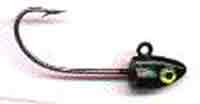 A jig is a weighted hook with a lead head opposite the sharp tip. They are often covered with a minnow of crawfish or even a plastic worm to get the fish's attention. The operator has to move the rod to get the jig to move.
- Surface lures are also known as top water lures, they float and resemble prey that is on top of the water.
- Spoon lures are made to resemble the inside of a dinner spoon. They are thin and flashy to attract fish.
- Plugs are also known as crankbaits, and are lures that are run through the water at faster speeds and dart back and forth resembling prey items.
- Artificial flies are designed to resemble all manner of fish prey and are used with a fly rod and reel in fly fishing.
- Bass worms are made out of plastic or rubber and are made to resemble worms and lizards in the water
- Spinnerbait are pieces of wire bent at a 90 degree angle with a hook on one end and a flashy spinner mechanism on the other end.
These fishing lures can be made out of wood, plastic, rubber, metal and cork. They may or may not have moving parts. They can be retrieved fast or slow.
Advantages are:
- reduction in use of bait. This contributes to resolving one of the marine environments more pressing problems, that being the undermining of marine food webs by overharvesting "bait" species which tend to occur lower in the food chain.
- promotes improved survival of fish during catch and release fishing. This is because lures reduce the incidence of deep hooking which has been correlated to fish mortality in many studies.
Plastic lures
Plastic lures are found in everything from plastic worms to jig trailers. Since plastic can be softened and manipulated over a low heat, you can make lures from scrap plastic.
Advantages of plastic lures over live bait:
- Plastic worms are less messy and do not mess up the inside of a boat.
- Plastic worms last longer than most live baits.
- You can make them at home when the night or weather prevent collecting live bait.
- Lessens the cruelty of fishing.
Artificial fly
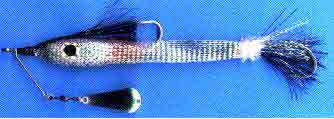
The term fly, in angling, does mean an actual fly or its imitation. A fly is the lure, whatever shape or color it takes. It can look like a worm or baitfish or like nothing at all - but if it used as if it was a fly, then it is a fly.
The term artificial fly is rarely used today in angling and fly-fishing literature, except in an historical context. The term fly is generally understood by anglers to mean an artificial fly used as an artificial bait cast by a fly fisher.
The term Fly lure is a British term which describes a fly which is designed to provoke curiosity rather than imitate a bait.
Artificial flies are lures imitating food which the fish is seeking. Artificial flies might imitate aquatic and terrestrial insects, crustaceans, worms, baitfish, vegetation, flesh, spawn, small reptiles, amphibians, mammals and birds, etc. Artificial flies were originally constructed from various furs, feathers, threads and hooks, but the key is not what is is made of, but what it looks like. Artificial flies are constructed by the practice of fly tying.
Imitation
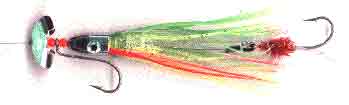
A major concept in the sport of fly fishing is that the fly imitates some form of fish prey when presented to the fish by the angler. Formalists believe that the form or shape is vital; colorists believe that color is major; attractors believe that neither is as imortant as something which simply attracts fish to strike (vague isn't it ?).
Categories of flies
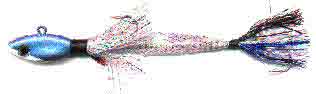
Here are categories of flies followed by illustrative examples:
- Dry Fly: A Dry fly is designed to be buoyant, or to float on the surface of the water. Dry flies typically represent the adult form of an aquatic or terrestrial insect. Dry flies are generally considered freshwater flies. Emergers are flies which float in the surface film.
- Wet fly: A Wet fly is designed to sink below the surface of the water. Wet flies have been tied in a wide variety of patterns to represent larva, nymphs, pupa, drowned insects, baitfish and other underwater prey. Wet flies are generally considered freshwater flies.
- Nymph: A Nymph fly is designed to resemble the immature form of aquatic insects and small crustaceans. Nymph flies are generally considered freshwater flies.
- Emerger: An Emerger fly is designed to resemble the not quite mature hatching aquatic insect as it leaving the water to become an adult insect. Emerger flies are generally considered freshwater trout flies.
- Streamer: A Streamer fly is designed to resemble some form of baitfish or other large aquatic prey. Streamer flies may be patterned after both freshwater and saltwater prey species. Streamer flies are a very large and diverse category of flies as streamers are effective for almost any type of gamefish.
- Terrestrials: Terrestrial flies are designed to resemble non-aquatic insects, crustaceans and worms that could fall prey to feeding fish after being blown or falling onto the water.
- Bass and Panfish Flies, Bugs and Poppers: Bass and panfish flies, bugs and poppers are generally designed to resemble both surface and sub-surface insect, crustacean, baitfish prey consumed by warm-water species such as Largemouth bass or bluegill. This genera of flies generally includes patterns that resemble small mammals, birds, amphibians or reptiles that may fall prey to fish.
- Pike and Musky Flies: Pike and Muskie flies are generally designed to resemble both surface and sub-surface crustacean, baitfish prey consumed by species of the genus Esox such as Northern Pike or Muskellunge. This genera of flies are larger than bass flies and generally includes patterns that resemble baitfish and small mammals, birds, amphibians or reptiles that may fall prey to fish.
- Carp Flies: Carp flies are designed to resemble various vegetative sources of food that carp feed on such as berries, seeds and flowers that may fall into the water
- Salmon Flies : Salmon flies are a special genera of flies tied specifically to fly fish for Atlantic Salmon. Salmon flies may be classified as lures but they maybe dry flies such ast the bomber. Salmon flies are also tied in classic and contemporary patterns
- Steelhead and Salmon (Pacific) Flies: flies are designed for catching andronomous steelhead trout and pacific salmon in western North American and Great Lakes rivers.
- Egg Flies: Egg Flies are designed to resemble the spawn of other fish that maybe encountered in a river and consumed by the target species. These are considered unsporting in Europe where thay are frowned upon!
- Flesh Flies: Flesh Flies are designed to resemble the rotting flesh of pacific salmon encountered in a river and consumed by the target species.
- Saltwater Flies: Saltwater flies are a genera of flies designed to represent a wide variety of inshore, offshore and estuarial saltwater baitfish, crustacean and other saltwater prey. Saltwater flies generally are found in both sub-surface and surface patterns[21]. White Lefty's Deceiver - An all purpose saltwater baitfish imitation
- Bonefish Flies: Bonefish flies are a special genera of saltwater flies used to catch Bonefish in shallow water. Bonefish flies generally resemble small crabs, shrimp or other crustaceans
- Tarpon Flies: Tarpon flies are a special genera of saltwater flies used to catch Tarpon in both inshore and offshore waters. Tarpon flies generally represent small baitfish commonly preyed upon by tarpon
- Striped Bass Flies: Striped Bass flies are a special genera of freshwater-saltwater fly used to catch Striped Bass in freshwater, inshore and offshore waters. Striped flies generally represent small baitfish commonly preyed upon by striped bass.
There are many pictures of flies and other lures on the Internet.