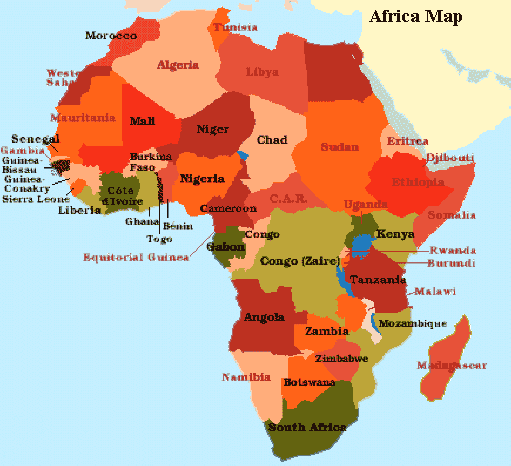
| 1957 | Ghana becomes first independent black state under Kwame Nkrumah through Gandhi-inspired rallies, boycotts, and strikes, forcing the British to transfer power over the former colony of the Gold Coast. |
| 1957-1958 | Ghana's Kofi Awoonor, respected African poet and critic, begins systematically collecting and translating (into English) traditional African oral art forms and orature, such as Ewe dirges. These he would weave into contemporary experience in his poetry and fiction (e.g. Night of My Blood, 1985; This Earth, My Brother, 1971], seeking to recover/reinvent pre-colonial traditional African culture and orature, and to affirm the continuity with indigenous creative forms as the key to survival. The last four decades of the 20th century have seen intensified efforts by anthropologists, historians, artists and others to preserve, collect, record, translate, and publish African oratures. |
| 1958 | Chinua Achebe (Nigeria): Things Fall Apart, written in "African English," examines Western civilization's threat to traditional values and reaches a large, diverse international audience. Like many other African writers, Achebe integrates his people’s rich oral traditions in his writing. African artists, writers, and filmmakers continue to draw upon the inspiration of African oral arts traditions in their work today. |
| 1958 | All-African People's Conference: Resolution on Imperialism and Colonialism, Accra, December 5-13, 1958 - |
| 1954 – 1962 | French colonies (Francophone Africa) oppose continued French rule despite concessions, though many are eager to maintain economic and cultural ties to France--except in Algeria, with a white settler population of 1 million. Bitterly vicious civil war in Algeria ensues until independence is gained in 1962, six years after Morocco and Tunisia had received independence. |
| 1961 | Franz Fanon’s enormously influential Les damnes de la terre [trans. into English as The Damned in 1963; as The Wretched of the Earth in 1965, with an introduction by Jean-Paul Sartre] examines the psychological and material costs of colonization in the midst of the bitter Algerian war for independence (1954-1962). |
| 1960 | Sierra Leone's William Conton publishes African, accentuating cultural differences experienced by a young African educated in England. |
| 1960 | D.T. Niane publishes Soundjata ou l’Epoque Mandiginue, a written French translation of the Sundjata oral epic as performed by modern Mande djeliba (griot) Djeli Mamdou Kouyate, passed from djeliba to djeliba in his family for 700 years; in 1965, translated into English as Sundiata: An Epic of Old Mali, by G. D. Pickett |
| 1958 | White [Dutch-descent] Afrikaners officially gain independence from Great Britain in South Africa. |
| Late 50s – early 60s | Anti-Apartheid Literature: The effects of South African racial policy on private lives increasingly treated in works of internationally known white South African writers in English, including Doris Lessing (Children of Violence series); novelist and short-story writer Nadine Gordimer, and playwright Athol Fugard. |
| 1963 | Dennis Brutus, prominent black South African poet (exiled and now living in the U.S.), depicts the effects of racial repression on everyday life, life in prison, in urban slums, in exile in Sirens Knuckles Boots--also themes in later works Letters to Martha (1969), Stubborn Hope (1978). |
| 1964 | Nelson Mandela, on trial for sabotage with other ANC leaders before the Pretoria Supreme Court, delivers his eloquent and courageous Speech from the Dock* before he is imprisoned for the next 25 years in the notorious South African prison Robben Island. |
| 1960 - 1961 | Zaire (formerly Belgian Congo, the richest European colony in Africa & setting of Joseph Conrad's Heart of Darkness) becomes independent from Belgium in 1960. Then in Elisabethville (now Lubumbashi), "charismatic nationalist Patrice Lumumba was ... martyred in 1961, with the connivance of the [U.S.] Central Intelligence Agency and a thirty-year-old Congolese colonel who would soon become President of the country, Joseph Deséré Mobutu." (Bill Berkeley, Berkeley's article explores "how, through a regime of corruption, violence, and shrewd manipulation, Mobutu ... managed to keep a grip on power since he first took over Zaire, with the help of the Central Intelligence Agency, in the 1960s, . . . despite (or perhaps thanks to) a state of near anarchy in which inflation has reached more than 6,000 percent and unemployment has stood at 80 percent." |
| 1962 | Algeria (of Arab and Berber peoples) wins independence from France; over 900,000 white settlers leave the newly independent nation. |
| 1963 | Multi-ethnic Kenya (East Africa) declares independence from British. |
| 1963, 1964 | East Africans produce important autobiographical works, such as Kenyans Josiah Kariuki’s Mau Mau Detainee (1963), and R. Mugo Gatheru’s Child of Two Worlds (1964). |
| mid-60s | Most former European colonies in Africa gain independence and European colonial era effectively ends. NEOCOLONIALISM, however, plagues many new African nations: Western economic and cultural dominance, and African leaders’ and parties’ corruption intensify the multiple problems facing the new nations. (As Achebe points out (in his interview with Bill Moyers: see Hum 211 African Film), colonial rule does not teach subjects how to rule themselves). Indigenous ethnic groups often feel stronger loyalty to traditional cultural ties and geographical homelands than to the arbitrary political boundary lines, first drawn by European colonizers, of independent African states. |
| 1965 | Rhodesia: Unilateral Declaration of Independence Documents, 1965, Primary documents available from Paul Halsall's Modern History Sourcebook: • Excerpt from Soviet Government Statement: The Situation in Southern Rhodesia, November 15, 1965: "The colonialists have committed a new crime against the African peoples. On November 11 the racialist régime of Ian Smith proclaimed the 'independence' of Southern Rhodesia [from the U.K.]. These actions are aimed at perpetuating in Southern Rhodesia a colonial system based on inhuman oppression of the Zimbabwe people, four million strong, by a handful of racialists and on ruthless suppression of the lust struggle of this people for real independence, freedom and social justice." |
| 1960s – 1970s | Negritude movement wanes after most African colonies achieve independence, and a new generation of African writers and intellectuals (e.g. Wole Soyinka in Myth, Literature and the African World, 1976) sharply criticized Negritude concepts, which they felt reinforced racial stereotypes and were largely irrelevant to the new problems facing post-colonial Africa. Negritude poets had "defended the humanity of those whose humanity had been denied on the basis of race, a step that was unquestionably necessary," but in so doing they idealized the precolonial past and affirmed an racial essence they claimed was "natural" to Africans (e.g. love of nature, rhythm, spirituality) (Julien in Martin and O’Meara 300). |
| 1965 & 1966 | Wole Soyinka’s novel The Interpreters (1965), a satirical analysis of modern Nigeria and its ancient traditions, is one of several works that establish Soyinka as an outspoken critic of Nigeria's military regime. Achebe’s A Man of the People (1966) is a political satire on corruption in an unnamed African country. |
| 1966 | Shakespeare's Julius Caesar translated into Swahili in 1966 by Tanzania's then president, Julius Nyerere, still a widely read work in East Africa. In the same era, Jean Joseph Rabéarivelo, who had modeled earlier poems on French symbolist writings, turns to brilliant use of the native vernacular ballad form of Madagascar. |
| 1966 | Flora Nwapa's Efuru is the first novel published by a woman writer in Nigeria, a pioneer in breaking the silence of black African female writers in English, regarding their lives, and the tensions between women’s desires and the strictures of African womanhood, at the same time that many male writers portray precolonial Africa as a golden age. |
| 1968 | Ayi Kwei Armah, Ghanaian novelist, depicted the end of the regime of Ghana's president Kwame Nkrumah in The Beautiful Ones Are Not Yet Born a novel of disillusionment and alienation. Social criticism also marks the work of Sembene Ousmane, Senegalese filmmaker and author of Gods Bits of Wood (1970), and Mongo Beti, Cameroonian author of The Poor Christ of Bomba (1956). |
| 1968 | Malian Yambo Ouologuem writes the controversial Le Devoir de violence (1968; trans. in English as Bound to Violence in 1971), of the fictionalized West African empire Nakem from 13th c. to 1947, drawing on oral traditions and Islamic chronicles of the Songhai Empire to challenge versions of the African past, and criticize the African elites still ruling the modern Sahel region despite independence. Ouologuem negates Negritude’s claim of African pre-colonial goodness and seems to assert instead an inherent African violence. |
| 1968 | James Ngugi [who later adopted the traditional Gikuyu name Ngugi wa Thiong'o], Henry Owuor-Anyumba, and Taban Lo Liyong call for "the Abolition of the English Department" at the University of Nairobi, Kenya, arguing that a Department of African Literature and Languages be set up in its place featuring study of the African "oral tradition, which is our primary root." |
| late 1960s - late 1970s | Popular genre painting--"acrylics or oils on canvas reclaimed from flour sacking"--by self-educated Shaba artists flourished in urban, industrial Katanga region of Democratic Republic of the Congo (formerly Zaire). The paintings "recalled ancestral origins, colonial history, the fight for independence, post-colonial struggles for power, and the predicaments of urban African life." Foremost among these painters was Tshibumba Kanda Matulu, who completed, in 1973-1974, a "complete History of Zaire in one hundred pictures and a narrative." |
| 1970s | Portugal loses African colonies, including Angola and Mozambique. |
| 1971 | Ama Ata Aidoo (Ghana) "Certain Winds from the South" [rpt. In African Short Stories ], from her early collection of short stories No Sweetness Here, voices women’s concerns as they face problems of urbanization, Westernization, sexism, absence of husbands and fathers, prostitution, clashing values and expectations. Aidoo is also a playwright [Dilemma of a Ghost, 1971; Anowa, 1980] and novelist [Our Sister Killjoy, 1966; Changes—A Love Story, 1991]. A significant development in post-independence African literature is the emergence of African women writers like Aidoo, Flora Nwapa, Mariama Ba, Eno Obong, Aminata Sow Fall, Awa Keita, and Khady Sylla. |
| 1974 | Kofi Awoonor (Ghana) publishes Guardians of the Sacred Wood: Ewe Poetry. |
| 1975 | Wole Soyinka (Nigeria), writing in English but drawing inspiration from Yoruba myths, produces a considerable body of poetry and plays, such as Death and the King's Horseman (1975). |
| 1976 | Cheikh Anta Diop (Senegal, 1923-1986), one of the great African intellectuals of the 20th century, publishes the influential and controversial book, The African Origin of Civilization, his project to "identify the distortions [about African history] we have learned and correct them for future generations" (Asante and Abarry 113). Diop’s body of work has altered the historiography of Africa, as well as scholarship in anthropology, Egyptology, physics, sociology, and politics. |
| 1977 | Bessie Head (Botswana; b. South Africa) publishes "Snapshots of a Wedding" in The Collector of Treasures. Rpt. in African Short Stories], one of her fictions of village life in rural Botswana. Head’s earlier novels When Rain Clouds Gather (1968), Maru (1971), and A Question of Power (1974), capture her experience of discrimination into tightly constructed art, and reveal interlocking oppressions of race, gender, and a patriarchal God. |
| 1977 | Ngugi wa Thiong’o publishes Petals of Blood, a major novel in English attacking present-day Kenyan society, joining his earlier novels [Weep Not, Child, 1964; The River Between, 1965; A Grain of Wheat, 1967], short stories, and plays dealing with many aspects of Kenyan lives within colonialism and neocolonialism, the impact of Christianity and Westernized education, the cultural practice of excision, religious conflict and collective struggle. ["Minutes of Glory," from Secret Lives - rpt. in African Short Stories.] Forced into exile from Kenya since 1982 when many Kenyan students and teachers were imprisoned, Ngugi lived in Europe, pursuing an interest in filmmaking and publishing children’s stories. As of 1998, Ngugi wa Thiong'o is Professor of Comparative Literature and Performance Studies, and Erich Maria Remarque Professor of Languages, at New York University. |
| 1979 | Mazisi Kunene publishes Emperor Shaka the Great: A Zulu Epic, in the oral tradition of the great Zulu praise singers of Zulu kings, reflecting the post-independence period of African nationalism, a Pan-Africanist vision of union and romanticization of the past. |
| 1979 | Buchi Emecheta (Nigeria), in The Joys of Motherhood, its title ironic, examines marriage and family in the village and colonial city from a woman’s perspective. 1980 Zimbabwe (formerly Southern Rhodesia) gains independence from large white settler population after years of hostilities. Zimbabwe's Struggle for Independence (Alison M. Ray, Postcolonial Studies at Emory Univ.): http://www.emory.edu/ENGLISH/Bahri/Zimb.html |
| 1970s –1980s | Police state of South African white minority rulers hardens to maintain blatantly racist and inequitable system of apartheid, resulting violence, hostilities, strikes, massacres headlined worldwide. [Map] South Africa: Black Homelands (CIA 1982, Univ. of Pennsylvania): http://www.sas.upenn.edu/African_Studies/CIA_Maps/South_Africa_19882.gif |
| 1982 | Athol Fugard's "Master Harold"…. & the Boys (1982; for a description of the film version, see Hum 211 African Films), joins his earlier plays, such as The Blood Knot (1961), Boesman and Lena (1969), Sizwe Bansi Is Dead (1976, co-authored with black South Africans John Kani and Winston Ntshona) in openly defying South African government policies, presenting spare dramas of survivors ensnared in apartheid. |
| 1984 | J. M. Coetzee, author of The Life and Times of Michael K. (1984), is one of many white South Africans writing in both Afrikaans and English, including poets D. J. Opperman and Breyten Breytenbach; their themes are concerned particularly with the damaging effects of the apartheid policy. |
| 1985 | Breyten Breytenbach, formerly a supporter of Afrikaner nationalism now in exile in Paris, writes The Confessions of an Albino Terrorist (1985) in English; renouncing his native language Afrikaans in this unflinching exploration of the effects of his seven years in South African prisons on charges of terrorism. |
| 1985 | Chinua Achebe and C. L. Innes, eds., publish African Short Stories, a collection of short fiction by African writers from all over the continent. |
| 1985 | African Cinema: Ousmane Sembene (Senegal), Souleymane Cisse (Mali), and other leaders of African cinema, create WAFCO (West African Film Corp.), advocating inter-African film as an instrument of education, change, cultural preservation and revival, and the most effective way to reach indigenous non-literate African audiences |
| 1986 | Nigerian poet-dramatist-prose writer Wole Soyinka awarded the 1986 Nobel Prize in Literature; fellow Nigerian John Pepper Clark uses Ijaw myths and social situations in poetry and plays, and poet-novelist Gabriel Okara, author of The Voice, concentrates exclusively on African characters and values. |
| 1988 | Egyptian novelist and short story writer Nabuib Mahfouz awarded the 1988 Nobel Prize in Literature, the first prizewinning writer with Arabic as his native tongue. |
| 1988 | Tsisi Dangarembga (Zimbabwe) publishes Nervous Conditions, a rebellious young woman’s coming of age story, moving from countryside to city, struggling against racism, classism, and sexism in colonial Rhodesia. |
| 1990 | I Is a Long-Memoried Woman (UK, Frances Anne Soloman, dir.), based on the Diasporic poetry of Grace Nichols (Guyana-UK). |
| 1990 | Dramatic freeing of long-time black political prisoner Nelson Mandela by Afrikaner President de Klerk in South Africa. Ethnic violence erupts between Zulu and Xhosa factions and bitter rivalries evident among South African black majority groups and white Nationalist groups. |
| 1991 | • South African Nadine Gordimer wins the Nobel Prize for Literature (official Nobel Foundation site with photo & biography of Gordimer: |
| 1991 | |
| 1993 | Apartheid is abolished, and South Africa begins preparing for multiracial elections. Mandela and de Klerk are awarded the Nobel Peace Prize for their leadership towards a democratic South Africa. |
| 1994 | In South Africa’s first multiracial elections in April, Nelson Mandela is elected President, instituting black majority rule. |
| 1994 1996 | The Hutus massacre up to a million Tutsis in Rwanda; then fearing reprisals from the new Tutsi government, more than a million Hutu refugees fled Rwanda in a panicked mass migration that captured the world's attention. • 500,000 Hutu refugees streamed back into Rwanda to escape fighting in Zaire, "yet another episode in the increasingly long history of tension and warfare between the Hutus and the Tutsis -- and of the West's equivocation about whether to intervene." "Violence and Unrest in Central Africa," 22 Nov. 1996, Atlantic Online / Flashbacks: "While tensions between Hutus and Tutsis created the recent refugee crisis, the civil unrest caused by Zairean rebels trying to overthrow Mobutu Sese Seko was the spark. Bill Berkeley's "Zaire: An African Horror Story" (August, 1993) explored how, through a regime of corruption, violence, and shrewd manipulation, Mobutu has managed to keep a grip on power since he first took over Zaire, with the help of the Central Intelligence Agency, in the 1960s." |
| 1999 | South Africa's second democratic elections were free of violence and disorder. The ANC (African Nation Congress) wins another commanding victory, some attributing this fact to Nelson Mandela's efforts to foster racial reconciliation and peaceful transition. Mandela's hand-picked successor Thabo Mbeki assumes the national presidency in the face of formidable challenges posed by the 21st century. |
| 2001 | After 38 years in existence, the Organisation for African Unity (OAU: http://www.oau-oua.org/ ) is replaced by the African Union, loosely modeled on the European Union. The Pan-African Movement says that the creation of the African Union brings the dream of a common African currency, foreign policy, defense structure and economic program closer to reality. |