Rules of teaching - 3

Return to Index

Rule 12: Methods of analyses.

Teach all known methods of analyses. Help students to practise them.
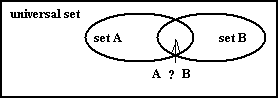
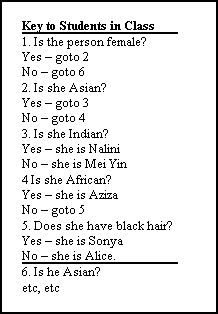
There are markedly different ways to solve problems:

Rule 13: Teach using all the senses.

The full concentration span of an adult for a spoken monologue is probably less than 10 minutes, if the adult is interested. With the current television programs which switch scenes every few seconds, this span is probably reducing to seconds.

Sitting still is unnatural. Try to sit without moving for one hour - the pain sets in at about 20 minutes and after 40, is excruciating.

The more senses used, the more neuron pathways are opened and the more they are reinforced and interconnected. The all-too-common practice of having pupils copy from the board is so unproductive it should be banned.
You would expect these same teachers to know how to copy efficiently, but they do not, and neither do their pupils.
Such pupils are seriously handicapped forever unless some poor teacher takes time out to undo the damage - I know, I have had to do it again and again.

Personally I do not like students sitting unless they are writing or having round-table discussions. In a laboratory, sitting students are more vulnerable to spillage of chemicals; they conduct experiments more slowly, their vision is restricted by their low seated height, and they suffer from poor posture. They are slower to fetch materials from other storage areas and become lethargic. It is amazing what students will do to avoid rising from a chair. Above all, chairs become entangled and obstruct efficient lab work.

I like students to think and move freely and gracefully, unobstructed as they design, build and test equipment. They should have only small notebooks, pencils and erasers for taking notes, while their formal report books should be packed away till after the experiment, to avoid becoming splashed and damaged.

Moving on, the tasks should be dot-pointed instructions (on paper glued to thick cardboard, and laminated or waxed with paraffin) to clearly show how to do each experiment, leaving the teacher free to act as supervisor, advisory only, asking penetrating questions which oblige pupils to think, and always keeping careful note of safety procedures and how students handle and respect equipment. Practical classes should not be more than 20 - don't laugh. I realise your class may be 40 and perhaps up to 80, but one person cannot supervise more than 20 diligently to provide the safety required. (Perhaps you can train older students to act as assistants ? I hope this book will facilitate training volunteers to support your teaching role, particularly mothers.)

In areas without resources, we can use what comes out of the kitchen or the garden or the bush. If it is not available to your students, it is probably irrelevant to your students.
For example, in chemistry, why use nitric acid, if your students will never see it again ?
Why not use the acid from the car battery ? or from a lemon ?
I use lemon juice frequently in my work with metals; it is weak and safe.

No pyrex test tubes ? Then use stainless steel cups or clear glass jars (provided no heat is involved). The kitchen is a good source of chemicals and these are familiar and relevant to pupils.
A clear jar filled with water from a local stream is a biological class in itself. Pupils can see, feel and smell it.
Rotting fruit is a biological haven: fungi, fruit flies, maggots, chemical changes. Do not breathe in fungi.
Study the behaviour of fruit flies - see the pattern in their behaviour.
Study the behaviour of gulls at the garbage dump.
Study the behaviour of people.
Opportunities for learning are endless. There is no excuse for pupils spending the lesson copying from the board.

But practical learning does not come naturally - it must be learnt in small increments with careful supervision. Training must be reinforced, checked, reinforced and checked again. Never assume that students will learn practical skills by themselves. They will learn inefficient, inaccurate and possibly dangerous techniques. It is far more difficult to develop practical skills than to teach theory from a book. But then, the students who learn theory from a book, will never learn to apply that theory in practical situations, and that effort will therefore have been entirely wasted.

Spend most teaching time training in practical skills like thinking, observing, recording, designing and using equipment, solving real-life problems.
The students can read the books by themselves and then come to you with any concepts they find difficult. Put students in charge of their own learning; they will learn faster, be better behaved, and soon you will have more time to develop practical and better opportunities for them to learn.

I know that in many western schools, classes are riddled with miscreants, but I see this as a school administration problem, not a teacher problem.
The administrators shirk their responsibility, saying that there is no problem, only that the teacher is incompetent.
It is up to staff to unite as a union and force the administrators to act. I have been in a rough school where all but two delinquents remodelled themselves within six weeks because of the installation of disciplinary management. (The parents of these two were summoned to school and advised that their offspring were suspended until they could prove their behaviour had improved. The burden of proof was theirs.)
Class productivity rocketed! Teaching became a pleasure.

Some rules of language teaching, applicable to all teaching, are:

Rule 14: Think when fresh; memorize when alert; organize when tired.

Each person has a 'daily' biological cycle; some have one every 24 hours, some have one every 48 hours.

In your biological cycle which hours:
My cycle goes like this:
Although my freshest time is between 10pm and 2 am, I awaken before dawn, so in summer I need to go to sleep by midnight if I am to get 4 hours' sleep. I try to get 5 hours' sleep per day, but I think 6 hours' sleep is healthier.

For those who sleep 8 hours per day, when you reach 75 years of age, you will have slept for 25 years.

Rule 15: Students must want to know.

A teacher should observe the following pattern:
The reasons are:
Sometimes you do not know the material well, but are suddenly thrust onto a new class without preparation. You know the routine: you arrive at a new school; the principal gives you a new subject and says the class begins in 10 minutes, so you walk slowly towards the classroom rapidly reading the text, memorizing the key phrases, names, dates or formulas; take 6 deep breaths to relax, and walk in with a smile and an air of confidence.
After introducing myself, I ask questions, lots of questions and throw the work onto the students. If there is homework, I soon have the best students, in pairs, putting up the answers on the board, without recourse to notebooks, and with the rest of the class making suggestions for improvement (not criticisms).
I do not pretend to know more than I do. I might say "This is not my field, but I bet at the end of this lesson I will have learnt more than you." Because I am more experienced I can usually teach more efficient ways for them to use in their studies, including valuable time-saving shortcuts.

To want to learn, students usually need 3 conditions:

With truely difficult classes, usually having a history of failure, I arrange for them to mark their own work. Then I sit with each one, turn by turn, admiring some cute sentence or idea or originality, while using their names. Others can hear my compliments. I never criticize. The tone of the class lifts. After a few days I admire a few sentences, then ask quietly how they might improve a lesser sentence. After they have attempted it, I return to a sentence I like, to compliment them again before moving on to the next pupil.

In the second week, I ask them how they have chosen to mark. Within another week, they begin to mark too strictly and I show them why I would mark them higher.
Within 3 weeks they are doing homework because they are, for the first time in their lives, succeeding in this subject. They beam with success, and they show their work with pride. They are now ready to learn. They did not realize it; they thought I was just sitting next to them enjoying our conversations, but I have also been studying their personalities, their fears and needs, while teaching and marking for 3 weeks. I do not need to use red ink on their work, or mark it; I do not need to set them an examination.

Because I reward them with genuine compliments, they respect me, and when their behaviour lapses, as it must, they are open to discusssion on how to regain their composure. We adults have our lapses and our sulks; allow them to have them too, but preferably in a non-disruptive way.

When they want to learn, you have satisfied Rule 15.

Rule 16: The most important ambience

The most important ambience in a classroom is one of respect - respect by the teacher for the student; respect by the student for the teacher; and all with respect for the material being learnt.

How to develop this 3-way respect depends upon the personalities of all three. A teacher should not pretend. Noone can live a pretence for long, and when the real self shows through it brings disappointment. Students usually respect a teacher who treats them respectfully and who helps them out of hours. Umpiring their games, helps; and showing interest in their weekend activities.

Just as each student has a distinctive personality, so too does each class. And any two personalities interacting, act and react, so there is no one formula for developing mutual respect. It is a continuing process of learning how to enhance the self-image of the other.

It helps if you can quietly let slip a genuine compliment each week. Avoid criticism, but if it has to be made, sit it between two compliments. Never make anyone lose face. Always end on a positive note.
Arrive on time. Never raise your voice; never appear phased. End each lesson without haste, exactly on time. This becomes easy with organization and practice.

End of Rules of Teaching (3).

Happy Teaching !
Return to Index